Fire Prevention Month: 5 Fire Safety Tips for Your Business
October is Fire Prevention Month, an important reminder to take a fresh look at fire safety around your property. While fire prevention is a year-round responsibility, every change of season is a good opportunity to reassess your building, refresh safety procedures and address potential risks before they become bigger problems.
The transition to fall brings a few unique considerations as temperatures drop and routines change. While professional fire safety inspections and maintenance are essential, there are also simple steps business owners and facility teams can take to reduce risk and help keep people and property safe.
Want to put these tips into action? Download our Fall Fire Safety Checklist for a quick, printable resource to help identify potential hazards and keep your facility fire-ready this season.
1. Check Your Commercial Fire Alarm System
Your fire alarm system is designed to provide early warning when an emergency occurs, but it can only do its job when it’s properly maintained and working as intended.
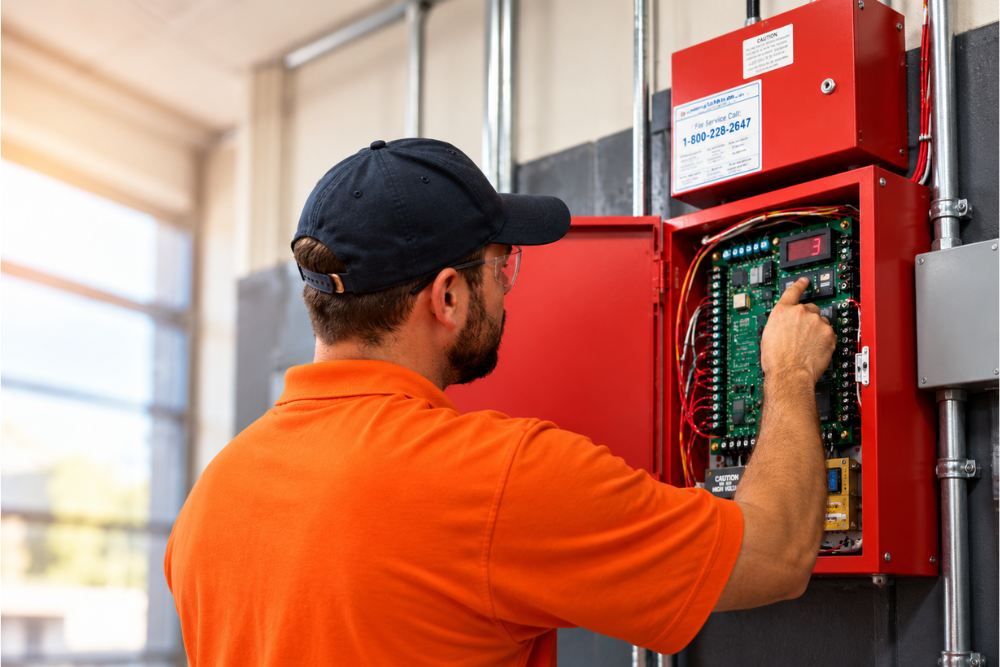
As part of your fall fire safety check, take a few minutes to look around your facility. Make sure fire alarm devices, pull stations and notification appliances are visible and unobstructed, and never ignore a trouble or supervisory signal on your fire alarm panel. These signals may indicate an issue that needs attention, even when there isn’t an active fire alarm.
Employees should also recognize what your building’s fire alarm sounds like and know exactly what to do when it is activated. Review evacuation procedures with your teams and reinforce an important rule: never assume an alarm is a false alarm.
Commercial fire alarm systems also require routine inspection, testing and maintenance. Make sure required services are up to date and address deficiencies promptly so your system is ready when it matters most.
Fire Prevention Month Tip: At Home
Don’t forget about the alarms where you live. Test smoke and carbon monoxide alarms regularly, replace batteries when needed and never ignore chirping or other warning signals. Replace alarms according to the manufacturer’s recommendations, and make sure everyone in your household recognizes the sound of the alarms.
2. Review Your Workplace Emergency and Evacuation Plan
Having an emergency plan is important. Making sure people actually know how to use it is even more important.
Walk through your facility and look at your evacuation routes with fresh eyes. Are hallways and stairwells clear? Are exit doors accessible? Are exit signs visible?
Remove boxes, seasonal decorations, furniture, equipment or other items that could obstruct a path to safety.
Employees should know how to exit the building, where to gather once outside and whom to contact in an emergency. When possible, identify alternate evacuation routes in case the closest exit cannot be safely reached.
Once you have a plan in place, review it with employees regularly and practice it. A written plan does little good if no one knows what it says when an emergency occurs.
Fire Prevention Month Tip: At Home
Create and practice a home escape plan, too. Make sure everyone in your household knows how to get out and where to meet once they’re safely outside. If a fire occurs, get out and stay out. Never go back inside to look for another person, a pet or belongings. Tell firefighters immediately if someone may still be inside.
3. Identify Common Workplace Fire Hazards
Many fire risks are hiding in plain sight. One simple way to think about fire prevention is to look for places where a potential ignition source and something that can burn are too close together. Heat-producing equipment, damaged electrical components and open flames can become dangerous
when they’re near paper, cardboard, chemicals, cleaning products or other combustible materials.
Kitchens, break rooms, storage areas, mechanical spaces and electrical rooms deserve extra attention. During your walkthrough, look for overloaded outlets, damaged or frayed electrical cords, improperly stored materials and clutter around electrical panels or equipment.
Extension cords and power strips also shouldn’t be used as a permanent solution when a facility doesn’t have enough electrical outlets. If you regularly rely on them to power equipment, it may be time to have your electrical needs evaluated.
Pay Extra Attention to Space Heaters
When colder weather arrives, employees may start looking for ways to stay warm at their desks. Portable space heaters can introduce both a heat source and additional electrical demand into the workplace.
If your business allows space heaters, establish clear rules for their use. Keep them at least three feet away from paper, boxes, furniture and other combustible materials. Plug heaters directly into a wall outlet rather than an extension cord or power strip, and turn them off when they’re unattended.
Consider allowing only approved heaters with safety features such as automatic shutoff and tip-over protection.
Fire Prevention Month Tip: At Home
The same space-heater rules apply at home. Give portable heaters plenty of clearance from bedding, curtains, furniture and anything else that can burn, and never leave one operating unattended.
If your home has a fireplace or other fuel-burning heating equipment, fall is also a good time to make sure it has been properly inspected and maintained before colder weather arrives.
4. Inspect Your Portable Fire Extinguishers
Portable fire extinguishers are easy to overlook until they’re needed. Fire Prevention Month is a good opportunity to give yours a quick visual check.
As you walk through your facility, make sure extinguishers are:
• Clearly visible and easy to access
• Not blocked by boxes, furniture or equipment
• In their designated locations
• Free from obvious physical damage
• Showing appropriate pressure on the gauge
• Current on required inspection and maintenance
If an extinguisher appears damaged, has been discharged or is missing components such as its pin or tamper seal, have it evaluated by a qualified fire protection professional.
And remember: different types of fires may require different types of extinguishers. Employees who are expected or permitted to use extinguishers should understand the equipment available in your facility and receive appropriate training.
Fire Prevention Month Tip: At Home
If you keep a fire extinguisher at home, don’t bury it in the back of a cabinet or garage. Keep it somewhere accessible, make sure household members know where it is and become familiar with its instructions before an emergency occurs.
5. Make Sure Employees Know What to Do in a Fire
A fire extinguisher can be an important first line of defense, but not every fire should be fought with an extinguisher.
Portable extinguishers are intended for small, early-stage fires when conditions are safe. Before attempting to use one, make sure others are evacuating, emergency services have been contacted and you have a clear escape route behind you.
If the fire is spreading, producing significant smoke or you aren’t confident you can safely approach it, evacuate immediately. Employees should never put themselves at risk to fight a fire. Getting out safely is always the priority.
When it is safe and appropriate to use an extinguisher, remember the PASS method:
• Pull the pin
• Aim low at the base of the fire
• Squeeze the handle
• Sweep from side to side
No one can predict when a fire emergency will occur, but you can prepare for one. Regular fire safety training can help employees understand your emergency procedures, recognize when an extinguisher may be appropriate and learn how to use one correctly.
Silco offers live fire training and classroom programs designed to give employees hands-on knowledge and experience before they’re faced with an actual emergency.
Fire Prevention Month Tip: At Home
Talk about fire safety with everyone in your household, including children. Make sure they understand that their job during a fire is to get outside and stay outside, not to try to fight the fire or retrieve belongings or pets. Once outside, call 911 from a safe location.
Make Fire Prevention a Year-Round Priority
Fire Prevention Month is a good reminder to take a closer look at your facility, but protecting people and property doesn’t stop when October ends.
Regular inspections, properly maintained fire protection systems, employee training and everyday awareness all play a role in reducing fire risk. Take a few minutes this month to walk your facility, look for potential hazards and talk with your team about what they would do in an emergency.
If you identify something that needs attention or aren’t sure whether your fire protection equipment is ready, Silco can help.
From fire extinguishers and fire alarm systems to sprinklers, suppression systems and more, our team helps businesses maintain their fire protection systems and prepare their people throughout the year.
Need help keeping your facility fire-ready? Explore Silco’s commercial fire protection services or contact our team to schedule an inspection, service or training.