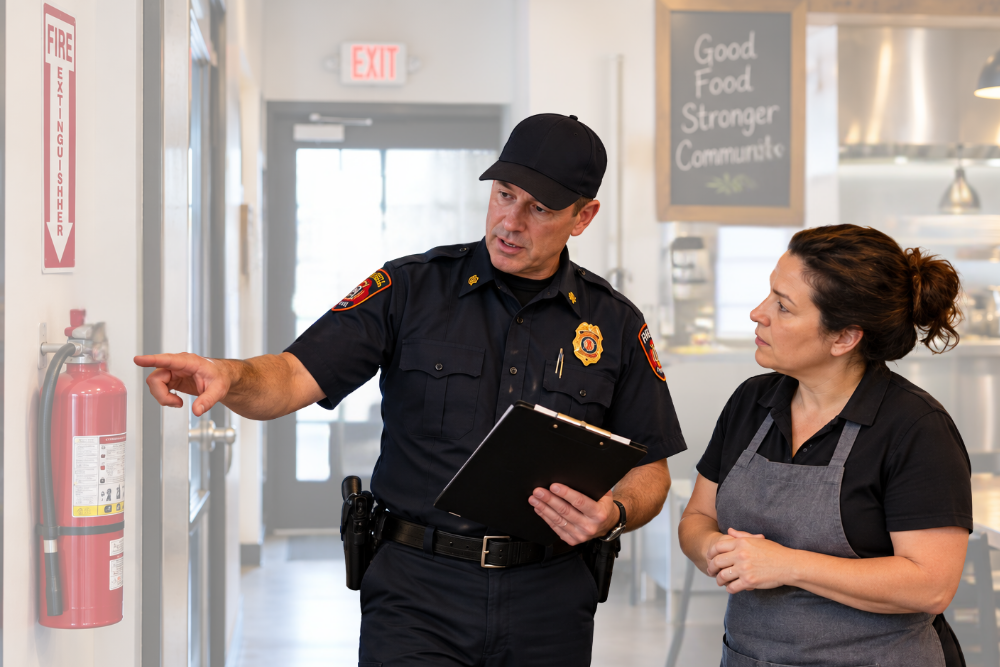
Would Your Business Pass a Fire Safety Inspection? A Fire Safety Inspection Checklist
Fire safety inspections can happen without warning, much like the fires they’re designed to help prevent.
Conducted by the local fire department, fire marshal or other fire safety officials, these inspections help determine whether your building meets applicable fire and life safety codes. While specific requirements and responsibilities vary by jurisdiction, building owners and business operators both play important roles in maintaining a safe environment.
Failing a fire safety inspection can result in required corrective actions, fines or, in serious cases, temporary closure. But staying inspection-ready isn’t just about avoiding penalties. It’s about protecting the people and property inside your facility.
The best approach? Make fire safety part of your everyday operations rather than scrambling to prepare when an inspector arrives.
Your Business Fire Inspection Checklist
Use this checklist to stay prepared and avoid getting burned by a surprise inspection.
It’s not enough to simply have fire extinguishers in your building or business. They also must be properly placed, appropriate for the hazards in your space and in good working order.
Here are a few basics to review:
- Make sure the extinguishers are easily accessible and free of obstacles.
- Complete the required monthly visual checks. Make sure the pressure gauge needle is in the green zone, confirm the safety pin and seal are intact, and document the monthly inspection on the tag.
- Confirm each extinguisher is the correct type and size for the hazards in that area. For example, commercial kitchens that use cooking oils and grease require Class K extinguishers, while Class A extinguishers are designed for common combustibles such as paper, cloth, trash and certain plastics.
If you’re unsure whether your fire extinguishers meet applicable requirements and National Fire Protection Association (NFPA) standards, Silco’s certified technicians can help.
We also track when your extinguishers are due for inspection and service, helping you stay on top of required maintenance and cross one more item off your to-do list.
2. Test alarms, sprinklers and exit lighting
Your building’s fire protection and life safety systems play an important role in detecting fires, controlling their spread and helping occupants evacuate safely.
As part of your regular facility walkthrough:
- Check your fire alarm panel for trouble or supervisory signals that may require attention.
- Look for visible damage, leaks or obstructions around sprinkler equipment.
- Make sure sprinkler control valves are in their required positions and report any unexpected changes.
- Confirm exit signs and emergency lighting are visible and free from obvious damage.
- Verify that required inspections, testing and maintenance are current.
Pro Tip: Emergency lighting is generally required to provide at least 90 minutes of illumination under applicable building and life safety codes. Make sure your emergency lighting receives required testing and maintenance so it’s ready during a power outage.
While visual checks can help identify potential concerns, they don’t replace required inspections and testing by qualified personnel.
3. Review changes to your facility
Renovations, equipment upgrades and changes to your building’s layout can affect existing fire protection systems, even when the changes seem minor.
Adding walls, changing how a space is used, increasing storage heights or relocating equipment can affect sprinkler coverage, fire alarm device placement and other fire protection requirements.
Commercial kitchens are a good example. Kitchen suppression systems are designed around specific cooking equipment and layouts. Moving or replacing appliances can affect nozzle placement and system coverage, potentially leaving equipment inadequately protected or the system noncompliant.
Before making changes to your facility, consult your fire protection provider to determine whether your existing systems need to be modified, inspected or updated to meet applicable fire codes.
4. Stay up to date on inspections and maintenance
Regular inspections, testing and maintenance are essential to keeping your fire protection systems in working order and meeting applicable fire code requirements.
Make sure you’re staying on top of required service schedules for your fire extinguishers, fire alarm systems, sprinklers, kitchen suppression systems and other fire protection equipment. If an inspection identifies a deficiency, address it promptly rather than waiting until your next scheduled service or fire department inspection.
At Silco, we help businesses stay on top of their inspection and maintenance schedules. Because many of our technicians hold multiple licenses, we can often complete inspections for several fire protection systems during the same visit, reducing disruptions to your operations and giving you one less thing to manage.
5. Keep documentation organized
When a fire safety inspector arrives, having the right documentation readily available can make the inspection process much smoother.
Keep inspection reports, service records and documentation of completed repairs organized and accessible. If a previous inspection identified deficiencies, maintain records showing what was corrected and when.
Make sure someone at your facility knows where these documents are stored and how to retrieve them when requested.
Pro Tip: Silco customers can conveniently access inspection reports and service documentation through our online customer portal, making it easier to find the records you need when an inspector comes calling.
Stay Fire Inspection-Ready with Silco
Preparing for a fire safety inspection shouldn’t begin when an inspector walks through your door. Regular equipment checks, professional inspections and maintenance, prompt deficiency corrections and organized records all help keep your facility prepared.
More importantly, these steps aren’t just about meeting fire code requirements. They’re about protecting your employees, customers and property every day.
Silco helps businesses stay on top of their fire protection needs with professional inspections, testing, maintenance and repairs for a wide range of fire protection systems. Whether you need to schedule routine service, address a deficiency, or better understand your facility’s fire protection requirements, our team is here to help.