Fire Extinguishers 101: What Every Business Needs to Know
Every business should have the appropriate fire extinguishers on hand. But choosing the right types, determining how many you need, installing them correctly and keeping them ready for an emergency can feel complicated.
Whether you manage an office, restaurant, warehouse or manufacturing facility, understanding the basics of commercial fire extinguishers is an important part of protecting your employees, customers and property. As experts in fire extinguisher sales, installation, inspections and maintenance, the team at Silco is here to help. We’re answering some of the most common questions businesses have about their fire extinguishers.
What Type of Fire Extinguisher Does My Business Need?
The right fire extinguisher for your business depends on the fire hazards present in your facility, including the materials, supplies, equipment and operations within your building.
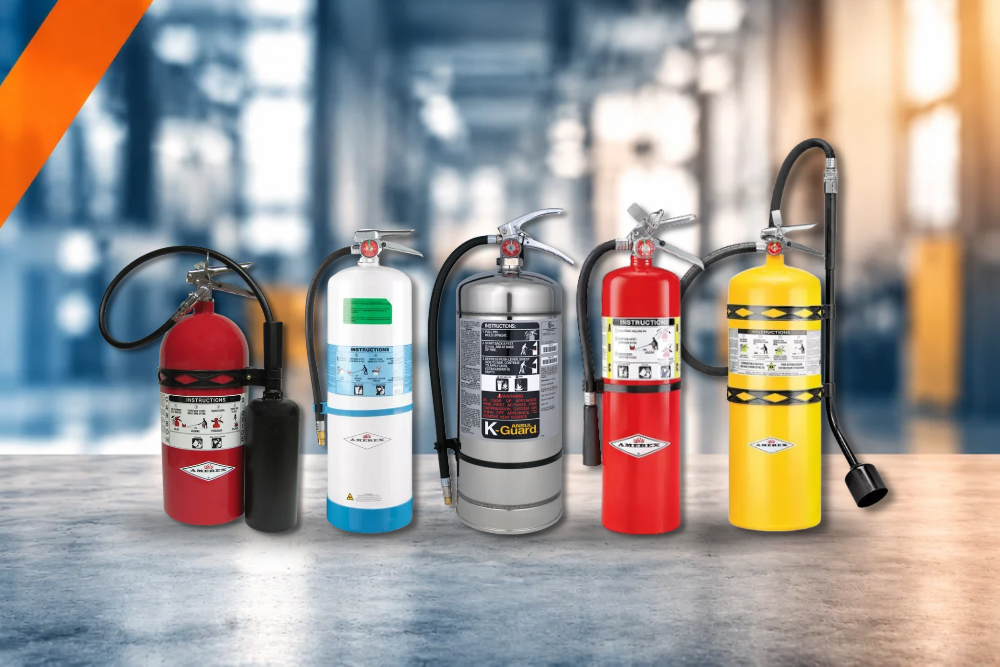
Fires are grouped into five classes based on the type of fuel involved, and extinguishers are rated for the classes of fire they’re designed to extinguish:
- Class A: Ordinary combustibles, including wood, paper, fabric, rubber and many plastics.
- Class B: Flammable liquids and gases, such as gasoline, oils, solvents, propane and petroleum-based products.
- Class C: Fires involving energized electrical equipment, including electrical panels, wiring, motors, servers and appliances.
- Class D: Combustible metals, such as magnesium, titanium, sodium and lithium metal, typically found in specialized manufacturing and industrial environments.
- Class K: Cooking oils and fats used in commercial cooking equipment.
Choosing the right fire extinguisher is an important part of keeping your facility safe and prepared. Whether you’re protecting an office, warehouse, commercial kitchen or industrial facility, understanding your fire risks is the first step.
Download our free Selecting the Right Fire Extinguisher Guide to explore the different types of fire extinguishers, understand their uses and find the right protection for your business.
Many offices and commercial facilities use ABC fire extinguishers because they are designed to handle several common types of fires. However, an ABC extinguisher isn’t the right choice for every situation.
Commercial kitchens and food trucks typically need Class K extinguishers, while server rooms and sensitive electrical areas may benefit from clean-agent extinguishers that minimize residue and potential equipment damage. Facilities with specialized hazards may require other extinguisher types.
What about lithium-ion batteries? Lithium-ion battery fires present unique hazards and should not be confused with Class D combustible metal fires. Standard ABC extinguishers may not adequately control a lithium-ion battery thermal runaway event. Businesses that use, charge or store lithium-ion batteries should evaluate these risks with a qualified fire protection professional.
How Many Fire Extinguishers Does My Business Need?
The number of commercial fire extinguishers your business needs depends on your building’s size, layout, occupancy, fire hazards and applicable code requirements.
One important consideration is travel distance, or how far someone must travel to reach an appropriate extinguisher.
For example, under NFPA 10, the maximum travel distance to a Class A extinguisher is generally 75 feet. Class B requirements vary by hazard classification and extinguisher rating, while specialized hazards such as commercial kitchens have additional placement requirements. A small office with standard combustible and electrical hazards will have different needs than a warehouse storing flammable liquids or a restaurant with commercial cooking equipment.
Ultimately, the local Authority Having Jurisdiction (AHJ), such as the fire marshal or fire department, interprets and enforces applicable fire codes.
Because requirements vary from one facility to another, a professional site assessment with Silco can help determine the appropriate number, types and placement of extinguishers for your business.
Where Should Fire Extinguishers Be Located in a Commercial Building?
Fire extinguishers should be visible, easily accessible and appropriately located for the hazards they’re intended to protect. They should never be blocked by furniture, inventory, equipment or other obstacles.
Depending on your facility, extinguishers may be needed in areas such as:
- Offices and common work areas
- Electrical and server rooms
- Commercial kitchens and break rooms
- Storage areas and warehouses
- Manufacturing and maintenance spaces
- Areas where flammable liquids or other specialized hazards are present
Proper placement involves more than choosing convenient locations. Securely mount extinguishers or install them in approved cabinets, place them where employees can access them, and keep them within applicable maximum travel distances.
Pro Tip: During routine facility walkthroughs, check that extinguishers haven’t been blocked. An extinguisher that’s difficult to reach may not be useful in an emergency.
Silco can help evaluate your facility and recommend appropriate extinguisher types, quantities and placement based on NFPA 10 and applicable local fire codes. We also offer fire extinguisher cabinets and mounting brackets to meet your facility’s needs.
How Can I Tell If a Fire Extinguisher Is Suitable for Commercial Use?
Not every fire extinguisher sold online or at a big-box store is appropriate for every commercial environment. Some are designed primarily for residential use and may not meet your facility’s specific fire protection needs.
When purchasing extinguishers for your business, consider:
- Fire classification and rating: Choose extinguishers appropriate for the hazards present in your facility.
- Recognized certification: Look for extinguishers listed and labeled by a recognized testing organization, such as UL.
- Construction and serviceability: Consider whether the extinguisher is rechargeable and can be professionally maintained throughout its service life.
- Code requirements: Confirm the extinguisher meets applicable NFPA 10 and local fire code requirements.
- Professional support: Work with a fire protection provider who can help with proper selection, installation, inspections and ongoing maintenance.
For businesses purchasing equipment in larger quantities, Silco offers wholesale fire extinguishers backed by expert guidance and dependable service.
How Often Should Fire Extinguishers Be Inspected?
Portable fire extinguishers generally require monthly visual inspections and annual professional maintenance under NFPA 10 and applicable fire codes. Designated facility personnel can typically perform monthly visual inspections. These checks help confirm that extinguishers are:
- In their assigned locations and easily accessible
- Free from visible damage, corrosion or signs of leakage
- Equipped with intact safety pins and tamper seals, when applicable
- Showing an operable pressure reading, if equipped with a gauge
- Properly documented according to applicable inspection requirements
Annual professional maintenance involves a more thorough examination by qualified personnel to evaluate the extinguisher’s condition, verify its readiness and identify any necessary service.
Even if an extinguisher has never been used, it can lose pressure or develop other issues over time. If the pressure gauge is outside the operable range or the extinguisher shows signs of damage, have it evaluated promptly.
Keep in mind that some extinguishers, including CO₂ extinguishers, don’t have pressure gauges. These require different methods of checking their charge, making professional maintenance especially important. Silco provides annual fire extinguisher inspections and maintenance to help businesses stay current on required service schedules.
What Maintenance Do Commercial Fire Extinguishers Require?
In addition to monthly visual inspections and annual professional maintenance, some commercial fire extinguishers require more extensive service at specific intervals. Depending on the extinguisher type and applicable requirements, this may include:
- Internal maintenance: Certain stored-pressure dry chemical extinguishers require an internal examination every six years.
- Hydrostatic testing: Extinguisher cylinders must undergo periodic pressure testing, commonly every five or 12 years depending on the extinguisher type.
- Recharging: Rechargeable extinguishers must be serviced after use, even if only partially discharged, and whenever an inspection or maintenance indicates a recharge is necessary.
Not every extinguisher follows the same maintenance schedule. The extinguishing agent type, cylinder construction, manufacturer requirements and applicable codes all influence when service is needed.
For businesses managing dozens or even hundreds of extinguishers across one or multiple locations, tracking these requirements can become a challenge.
Silco helps businesses manage required fire extinguisher inspections, testing, maintenance and recharging so they can stay on top of service schedules and keep their equipment ready when needed.
What Should I Do After a Fire Extinguisher Is Used?
Remove any fire extinguisher that has been discharged, even partially, and have it professionally evaluated before returning it to service.
Rechargeable extinguishers may be serviced and recharged, while certain non-rechargeable extinguishers must be replaced.
Silco offers fire extinguisher recharge and maintenance services for a variety of extinguisher types, including CO₂ and clean-agent extinguishers. Our team can help determine whether your extinguisher can be safely returned to service or needs replacement.
Important: Make sure your facility maintains the required fire extinguisher coverage while an extinguisher is out of service. Coordinate with your fire protection provider to determine whether a temporary replacement or other appropriate measures are needed.
Should Employees Be Trained to Use Fire Extinguishers?
Having the right fire extinguishers is only part of workplace fire safety. Employees also need to know how to respond if a fire occurs. Depending on your workplace’s emergency action plan and applicable OSHA requirements, employees may need education or training on using fire extinguishers.
Some businesses designate specific employees to use extinguishers, while others require all employees to evacuate immediately. Your organization’s emergency procedures should clearly communicate these expectations. If employees are authorized to use fire extinguishers, they should understand the equipment’s limitations and only attempt to extinguish small, early-stage fires when it is safe to do so.
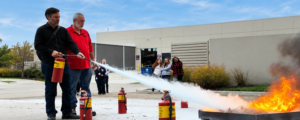
Employees who are trained and authorized to use extinguishers should also be familiar with the PASS method:
- P — Pull the pin.
- A — Aim low at the base of the fire.
- S — Squeeze the handle.
- S — Sweep from side to side.
Remember: Employee safety always comes first. If a fire is spreading, producing significant smoke or creating an unsafe situation, evacuate immediately and call 911 from a safe location. Never put yourself in danger trying to fight a fire.
Silco offers hands-on live fire extinguisher training to help employees understand proper extinguisher use and build confidence responding to emergencies.
Stay Compliant. Protect What Matters.
Choosing the right fire extinguishers is just the beginning. Proper placement, regular inspections, employee education and ongoing maintenance all play an important role in keeping your business prepared for an emergency.
Silco helps businesses simplify fire extinguisher management with professional assessments, equipment sales, installation, inspections, maintenance and recharging. Whether you’re outfitting a new facility, purchasing extinguishers for multiple locations, or maintaining existing equipment, our team can help you understand your requirements and keep your extinguishers ready when you need them most.
Contact Silco today to schedule a site assessment or request a quote.